Rachel's story.
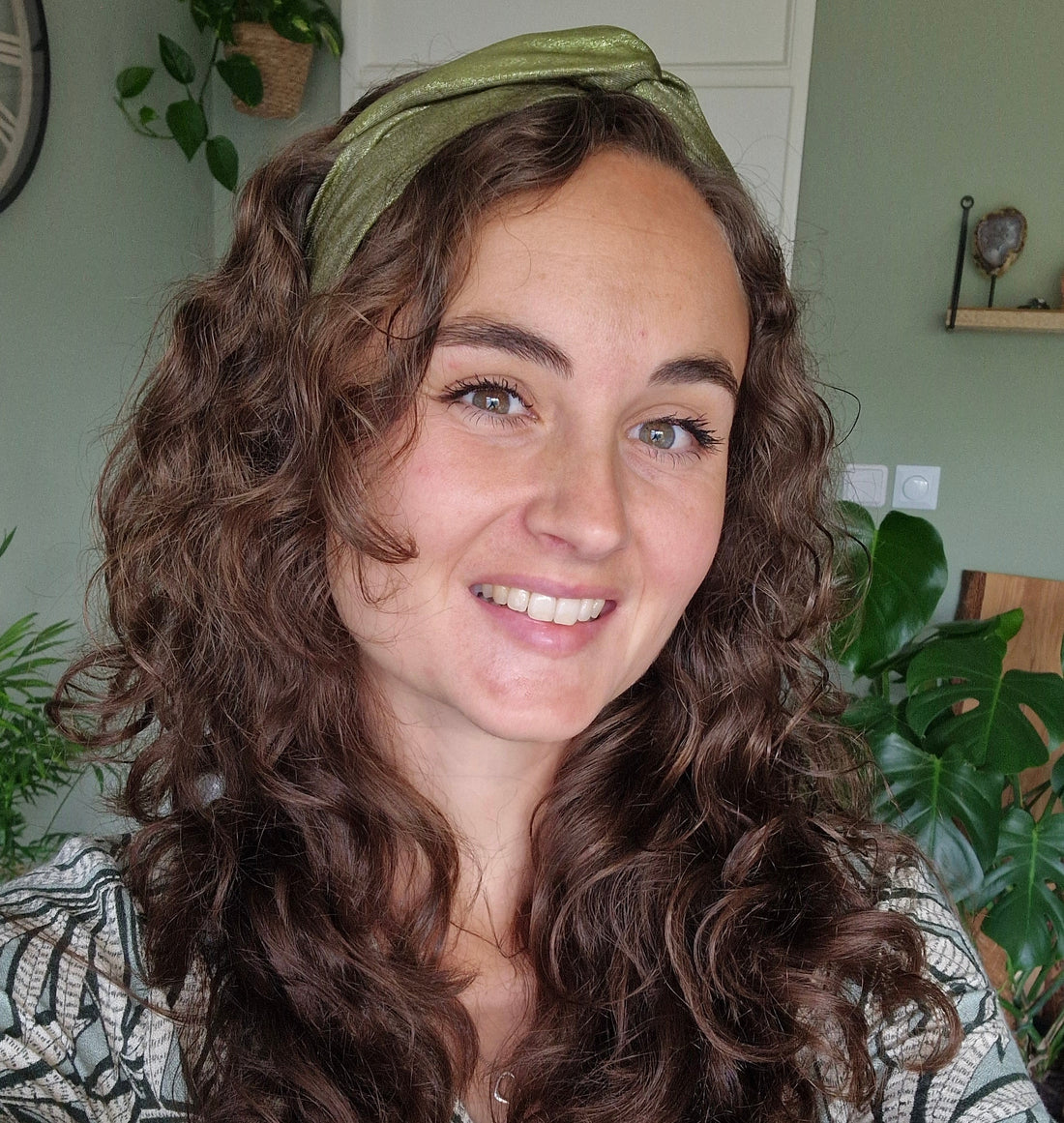
Living with a chronic illness
General information
Can you tell us something about yourself?
(For example your name, age, profession, hobbies)
My name is Rachel, I'm 32 years old, and I live with my dog, Riley. Unfortunately, I'm disabled. So I'm not working at the moment, but I used to be a secretary and have built up secretarial positions at various companies. My hobbies are crocheting, photographing (birds), DIY, and gaming. I have a partner; he has two daughters who mostly live with him, but we don't live together. I have a very good relationship with his daughters, and I'm very happy about that.
What chronic illness do you have and when were you diagnosed?
In addition to several conditions (a benign tumor on my liver that is unfortunately growing, IBS, and a long-term precancerous cervix for which I recently underwent surgery), I have deep-infiltrating endometriosis and adenomyosis. This was diagnosed in August 2023 after a long and difficult process.
How was the process leading up to your diagnosis? (For example, quick, long, frustrating, or involved visiting many doctors.)
I had severe symptoms from my first period. I started taking the birth control pill at 14 and took it continuously (and therefore continuously) until I was 25. I briefly stopped taking it in between, but because it was impossible, I quickly started again. At the age I finally stopped, a lot was going on in my life (my relationship ended, my sister emigrated, and some medical issues came up that worried me, like a tumor on my liver). I stopped taking the pill for my mental health. What a difference! No more hormones, I thought. For five years, my periods became increasingly heavy and painful, and I went from one day of being unable to do anything on the couch to 10 days, fainting while having a bowel movement, and painkillers that were useless. Eventually, the pain wouldn't stop, even after the bleeding had stopped. I had terrible abdominal pain and regularly ended up in the emergency room. I also had severe pain in my legs, but it would come and go, as well as a swollen and painful tailbone. The GP checked me over but couldn't find anything. After a norovirus infection, I ended up back in the emergency room, where I was referred to a gastroenterologist. After many visits and frustrating conversations, I demanded a colonoscopy, which they refused to give me. However, I managed to arrange one through another doctor, and according to the attending physician, no abnormalities were found. I asked (and begged) my doctor for an MRI scan because I felt something was completely wrong there. She ran some standard (blood) tests and repeatedly sent me home without helping me. After our last conversation, the doctor angrily sent me home and told me I should see a psychologist. Despite me explaining that I'd been in therapy for years and that I was certain this wasn't just "all in my head," she refused to help me. MRI scans are expensive, and they wouldn't show anything anyway, she claimed. Frustrated and hopeless, I went to my gynecologist, where I was being treated for an abnormal Pap smear. After an ultrasound, he urgently referred me for an MRI, which revealed everything was indeed completely wrong. Deeply infiltrating endometriosis had already grown through my intestinal wall and bladder. There were large pockets of endometriosis at the front and back of my uterus. My right ovary was 12 cm and attached to my uterus, and my left ovary was also attached. That's when I first heard the term "frozen plevis." It was (and still is) a war zone. This gynecologist quickly referred me to the endometriosis center in Amsterdam, and that's when the rollercoaster of hormones and treatments truly began. Starting with Lucrin injections, until I could see a specialist there.
Impact on daily life
How does your illness affect your daily life?
The disease dictates everything. What I can do in a day, and what I can't. Planning is very difficult because I never know in advance how I'll feel or whether I'll make it. Over the past two years, I've tried all kinds of hormones, from injections that induce menopause to progesterone pills, an IUD, and birth control pills. These hormonal fluctuations make me a completely different person, and this naturally affects my mental state and how I interact with others. Since the beginning of 2023, I've become much lonelier and have lost much of my independence and freedom. I feel depressed and feel like I've truly lost control of my life due to this disease. The hormones also make me much less cheerful and more depressed.
What adjustments did you have to make to your routine?
Aside from no longer being able to work, I'm especially struggling to manage everything on my own. After breaking up with my previous partner, I took on full responsibility for our dog. Even though he's older now, I struggle to give him his exercise. He's a large and active dog, and the pain (especially the nerve pain in my legs and the stomach ache) makes this difficult. I'm always behind on my housework, on DIY projects, and on just getting my house in order, sorting things out, and finding a permanent place for myself. I haven't managed that since I moved here five years ago. It also prevents me from planning things because everything feels like survival.
How did those around you (family, friends, work) react to your diagnosis?
My family has always been supportive, yet there was a lot of misunderstanding, and I still experience that. Because many tests didn't reveal anything for a long time, those around me also doubted whether it wasn't "all in my head." I always had "something." Which is true, but at the time, it wasn't yet explainable. If I faint in the toilet at night, I can always call my parents; they live nearby and always come to pick me up. Yet, I notice it's difficult for other people. I'm ill, I have a diagnosis, but there's no quick fix. I will always be ill, even though the severity fluctuates from day to day, from moment to moment. It puts a great strain on my relationship because I have to take the illness into account, can no longer always be spontaneous, and the intimate side has become complicated. I want to be a good stepmother to my boyfriend's daughters, but my energy and pain levels regularly get in the way. I didn't have many friends to begin with, but unfortunately, almost all of them are gone from my life. My best friend, who herself has a mild form of endometriosis, left me in a very horrific way. I'm still deeply saddened by this. As a result, I've become much lonelier over the years.
Physical and mental health
Which symptoms affect you the most?
I'm most affected by chronic menstrual-like symptoms, stabbing pains, and stomach/intestinal pain. I'm chronically dizzy and nauseous, which I think is the biggest issue. I also have chronic nerve pain in my legs and haven't felt like myself for a long time. Extreme fatigue and low energy are also very frustrating. Other symptoms come in waves, such as a sore tailbone, back pain, and extreme abdominal pain. I can cope with these better because I know they're temporary.
How do you cope with the mental impact of your illness?
I'm working with a medical psychologist to try to cope with the illness. The mental aspect is 100 percent harder for me than the physical problems. I can't be who I want to be, I can't do what I want. Without the illness, my life would be very different. I'm trying to process the loss of it, but it's still in the early stages. I envisioned myself as a young mother of a whole bunch of children, full of energy. This is how I've always been as a child and young adult. Always busy, always caring for everyone, always up for socializing. I'm in the middle of the grieving process of saying goodbye to Rachel.
Do you have any aids or treatments that help you? (e.g. medication, therapy, aids)
The hormones have helped my endometriosis to subside somewhat recently. I also tried Nuvaring to see if it would be more beneficial mentally. I've since stopped. I've also just started ACT therapy and schema therapy. I used a wheelchair for a short time after my cervical surgery, which I did enjoy. But I'm not yet mentally ready to accept this long-term.
Medical care and experiences
Do you have positive or negative experiences with doctors and specialists?
As I described earlier, I had a very negative experience with my gastroenterologist and have filed a complaint about how she treated me. Furthermore, my own gynecologist, the endometriosis specialist, the pain clinic, my GP, psychologists, and my current gastroenterologist have all been incredibly kind and caring. Unfortunately, it's busy everywhere, things take a long time, and reaching a doctor is sometimes difficult. I do feel heard, and I know they have my best interests at heart. However, the fact that the doctors ultimately don't know what to do is difficult. So, it's not a matter of not wanting to help, but of not being able to. I also find it difficult in the Netherlands because so many things you need aren't covered by health insurance.
What do you wish doctors understood better about your illness?
The total impact of mental and physical complaints caused by an illness. I see each doctor individually, each treating me in their own area of expertise. This means so many treatment options are overlapping. Only now, after two and a half years, has a meeting been scheduled with all the doctors involved in my care to discuss the situation. In my opinion, there's room for improvement here. Very little is known about endometriosis itself. Even if you say you think you have it, you're not taken seriously. Healthcare for women's diseases can still significantly improve.
What advice or treatments have worked well for you?
I'm still really trying to figure that out. Especially reducing stress, and even in the smallest things, trying not to worry if your house is a mess or you're too tired one day to do anything but walk the dog. Being kinder to myself. Clearer boundaries is also something I've had to learn. I like to put myself aside for others, but that's not always possible anymore. And finding happiness in the little things. Not always thinking about what hasn't worked, but trying to see what has. And also keeping doing things, no matter how difficult. I'm mainly trying to get out of survival mode and, through therapy and adjustments, add something valuable to my life again.
Support and community
Have you found support from peers or online communities?
Yes, definitely! The Facebook groups are very helpful. That's how I discovered, for example, that the pain in my tailbone was caused by deeply infiltrating endometriosis. I'd never heard that before, so it made sense. However, I also believe that the groups often include people who aren't doing well, who are dissatisfied, or whose treatments aren't working. This can be a pitfall; there are, of course, far more stories online from people whose lives are not going well than well, and you can influence that without even experiencing it yourself. However, I also get a lot of tips and support from fellow sufferers on social media, including yours, Devney!
What does support mean to you, and what helps you most?
I value people who are simply there the most. Even though my relationship often struggles due to external circumstances, it's incredibly valuable to me when someone sticks by me. Help with the little things is the most helpful, like walking my dog so I can go somewhere. Cooking for me, or just calling to chat. Visiting me when I call to say something's not going well, or trying to cheer me up with small things. It doesn't always have to be a grand gesture. It's incredibly valuable to me when I feel involved, even though I often don't feel like I'm adding value.
Tips and advice
What advice would you give to someone who has just been diagnosed?
Take your time getting used to the idea of being chronically ill. I spent a long time struggling, waiting for a treatment plan to "fix" it. But of course, that's not happening. Don't invest your energy in people who don't want to understand you, and put yourself first. Trust your own feelings; you know your body best! Don't be too hard on yourself and be proud of small victories.
What advice would you give to healthy people about living with a chronic illness?
It's not visible, and every day is different. Just because someone smiles or has a nice outing doesn't mean it wasn't effortless. Please don't judge people. Communication is truly the most important thing. Don't offer unsolicited advice or stories you've heard from others about things that supposedly "help," but ask open-ended questions. A simple "Is there anything I can do for you?" or "What would you like right now?" can make a huge difference for someone with a chronic illness. And even if you're not chronically ill, realize that health is the greatest gift you can receive.
Future and hope
How do you view the future with your illness?
I hope I can eventually find something that my body responds well to, both physically and mentally. I daren't look too far ahead. Living, not surviving, is the ultimate goal!
Do you have certain goals or dreams that you want to achieve despite your illness?
My biggest dream was to become a mother, a dream that almost certainly won't come true. I hope to regain some control over my life, so there's room for fun things and I can find peace in being ill. I'd like to do more with my creativity; I'd like to learn to sew, for example. I also feel a strong desire to do something with the disease that can be valuable to others. It could be guiding people through certain processes or educating them about endometriosis and everything that comes with it. I'm not there yet, but I definitely want to do something with this someday. I'd also love to go on vacation with my dog. He's getting older, and he hasn't been able to do it in recent years. I find planning ahead difficult, and it also creates anxiety. I'd love to create some beautiful memories with him.
Love,
Rachel