Nadine's story.
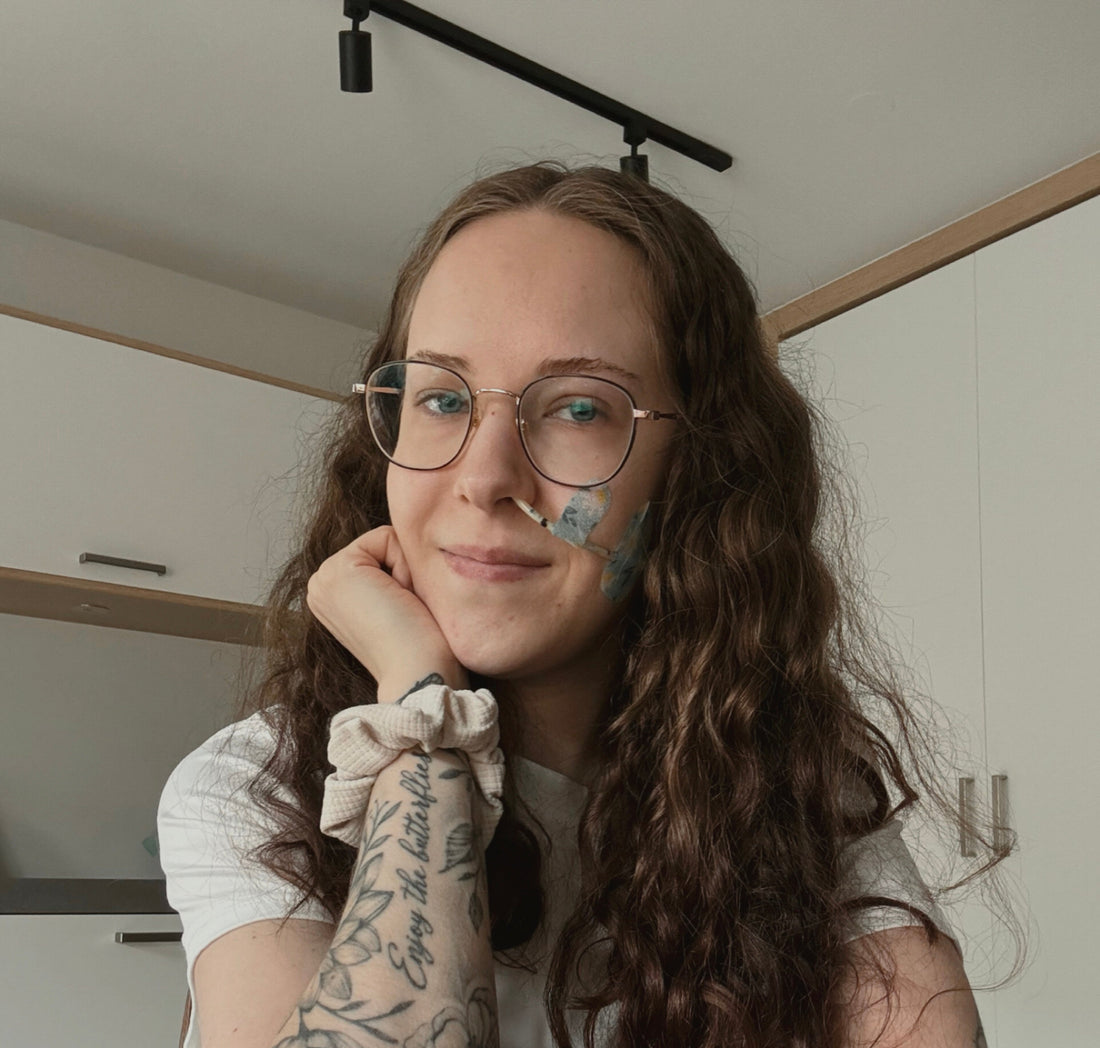
Living with a chronic illness
General information
Can you tell us something about yourself?
(For example your name, age, profession, hobbies)
I'm Nadine van Spanje, 28 years old, and have been an entrepreneur for almost 10 years. Unfortunately, I'm currently completely unable to work or volunteer. I'm currently receiving benefits. My hobbies were actually the things I used to do for work, so photography, social media, helping people, and generally being entrepreneurial. Now I fill my free time with diamond painting, drawing/coloring, or the Sims, and I listen to books or music. There are good days when I can do this for a few hours, but sometimes I can't do it at all for a week.
What chronic illness do you have and when were you diagnosed?
I have ME/CFS, POTS, hypermobility syndrome (probably hEDS, but I'm still on the waiting list for the center in Rotterdam), and Wilkie Syndrome. I received these diagnoses in 2024 and 2025.
How was the process leading up to your diagnosis? (For example, quick, long, frustrating, or involved visiting many doctors.)
Where do I begin? I became ill back in 2014, and in retrospect, that was probably the start of ME/CFS and POTS. My GP referred me to specialists again and again, believing something was wrong. Unfortunately, I kept returning to her because the specialists found nothing and even claimed I might have an eating disorder due to my underweight (anything but that). In 2023, I ended up at Radboud University Medical Center with a wonderful doctor who went through my history with astonishment. It took a few months, until early 2024, but it turned out I had something: ME/CFS. That year, I was also diagnosed with POTS and hypermobility syndrome (working title). When I became very ill at the end of 2024 and had to be tube-fed, after much insistence, I also discovered I had Wilkie Syndrome. I've been on the waiting list for the gastrointestinal center at University Hospitals Leuven since the beginning of this year, and I can't get an appointment until September. In the Netherlands I am too complex with all the diagnoses.
Impact on daily life
How does your illness affect your daily life?
It affects everything. I wake up with 10% battery and use that up before I've even had my first cup of coffee of the day. No matter how much I rest, my battery simply doesn't charge any further and drains very quickly. It's like being an iPhone 4 in the world of the 16 Pro. Moreover, POTS and hypermobility use even more energy because my heart rate increases dramatically when I'm not lying down or exerting myself (for example, I shower with a heart rate of 180 without medication or a shower stool) and because my muscles work extra hard to keep my joints somewhat stable.
I also have a feeding tube due to Wilkie Syndrome. It's literally a burden to carry, as I'm fed all day long through a heavy pump in a backpack.
What adjustments did you have to make to your routine?
When I started tube feeding in January 2025, I had to call home care in case anything went wrong. On the evening of my first feeding, a home care worker came by to explain everything and almost immediately said they would come twice a day to help because I was so weak. They still come twice a day to help with support stockings, medication, and washing my hair. They also still help with the tube feeding.
I also have to rest a lot and plan everything very carefully. That doesn't always work out, because some things just pop up, and I'm often tempted to spontaneously join a friend for a quick trip to a store or coffee shop, for example. I then have to recover from this for hours or even days, or I develop PEM (post-exertional malaise, the condition where I get sicker after exertion).
How did those around you (family, friends, work) react to your diagnosis?
I think most people find it incredibly upsetting, but because I'd been ill for so long, no one was particularly surprised when I received the diagnosis of ME/CFS and POTS. I did receive a ton of cards and gifts from clients and friends when I became so ill at the end of 2024 and had to stop working. I still occasionally receive a card or sweet message from clients!
Physical and mental health
Which symptoms affect you the most?
The lack of energy, the pain, and the uncertainty. At some point, there's simply nothing you can do anymore. Especially the pain is very difficult, because even with the strongest painkillers, I still have pain.
How do you cope with the mental impact of your illness?
At some point, you just have to deal with it. Luckily, I have dear friends who don't mind receiving voice memos full of complaints, and the nurse practitioner at the GP's office is a huge help.
I've also had a few appointments with a medical psychologist, but I'm surprised there's so little knowledge about living loss and ACT (Acceptance and Commitment Therapy). These sessions drain my energy and yield little, so I'm considering stopping. I genuinely get more out of connecting with friends and others in the same situation.
Do you have any aids or treatments that help you? (e.g. medication, therapy, aids)
I'm currently taking many different medications that help or alleviate some of the discomfort, and I wear support stockings to alleviate some of the POTS symptoms. I also receive a wheelchair from the Social Support Act (WMO) because I can no longer walk properly or stand for long periods of time.
I just mentioned that I'm receiving home care, which I'm incredibly grateful for. I'm also being supported by a dietitian, occupational therapist, and physiotherapist. It's essentially a mini-rehabilitation program they're working with me. As I write this blog, a multidisciplinary consultation (MDO) is being scheduled with all these therapists and my GP, so they can create a plan together to provide me with the best possible care.
Medical care and experiences
Do you have positive or negative experiences with doctors and specialists?
I have an incredibly wonderful and dedicated GP whom I can always call and who also visits me at home if necessary. My current cardiologist is also very dedicated, and although he doesn't specialize in POTS, he does everything he can to help me as best as he can. I also have wonderful home care workers, and I couldn't wish for a better POH, dietitian, occupational therapist, or physiotherapist!
Unfortunately, I've also had many negative experiences with doctors and therapists who claimed it was all in my head or assumed I must have an eating disorder because I was underweight. The worst was the doctor I saw at the end of 2024 when I was incredibly ill. The lovely woman left me helpless when my BMI was only 15, because I couldn't eat anymore due to the pain, claiming "I'd always been underweight," but of course, it wasn't that bad. On January 6th at 8:00 AM, I called my GP to say I couldn't handle it anymore, and by 8:50 AM I was already there. I was going to call the gastroenterologist one more time and ask for tests and a feeding tube, otherwise the GP would call the gastroenterologist.
I had a phone appointment the next day, and after a good hour, I painfully managed to schedule three tests, but according to her, nothing would come of it, because the blood results were fine. She would also call the dietitian about the possibility of tube feeding, but for a maximum of 6-8 weeks. That same week, I received tube feeding, and all three tests showed abnormalities, and it turned out I had Wilkie Syndrome, which is rare. In addition, I couldn't swallow properly with the tube, which the doctor attributed to anxiety. It turned out to simply be a tube that was too thick... Not much later, the doctor himself said I would be rescheduled with another doctor who could "help me better." Yeah, right ;)
What do you wish doctors understood better about your illness?
Everything ;) ME/CFS is a multisystem disease, so it affects virtually everything. The same applies to POTS and hypermobility/possible hEDS.
These are all relatively common conditions, but there are no specialist doctors for ME/CFS and POTS, or they are inaccessible (far away and/or not covered by insurance). I don't have a doctor for ME/CFS at all, so I rely on my general practitioner, who thankfully does her very best. But with all due respect, a general practitioner is not a specialist. Therefore, I can't expect specialized care from her.
What advice or treatments have worked well for you?
Before I had the correct diagnosis, I was told to just keep going, to push through. No naps, no negativity, just pretend it's nothing, because it isn't. That backfired completely, because I constantly suffered from PEM without even realizing it.
Now I'm being advised to rest and stay within my limits. To delegate things and accept help. The chance of improvement is slim, the chance of worsening is high. So I simply have no choice but to take everything very slowly and prioritize.
Support and community
Have you found support from peers or online communities?
Yes! I'm in a group chat with all the girls/women in their 20s where we're all there for each other. Just venting, asking a question, sharing experiences, or just venting some more. And we're also sending memes ;)
I also connect with others in the same situation on Instagram. For many people who are housebound or even bedridden, social media is the only way to stay connected.
What does support mean to you, and what helps you most?
With others in the same situation, it's about understanding and not making a competition about who's the worst off. Being able to complain and vent, and just be truly angry or sad, and grieve for what's no longer possible or what's gone.
With friends, it's all about the fun. Nice chats about everything and anything, showing each other our new clothes, getting videos of the concert someone attended, their pet, updates on their lives, and also offering support to friends when they're going through something difficult. They know they can always text or call me and visit if anything happens, but also just for the company of friends.
What advice would you give to someone who has just been diagnosed?
Whether or not you receive appropriate care, medication, or therapy from your doctor depends heavily on your diagnosis. Some chronic conditions allow you to live a relatively normal life, but sometimes you'll be partially or completely confined to your home. Always ask about the options available and the potential impact of your diagnosis.
Peer support has also helped me enormously. One person is completely bedridden and spends 24/7 in a dark room, while another can still work 32 hours a week and enjoy other things. From everyone, I've learned different things about my diagnoses that the doctor never told me, but which are incredibly important.
What advice would you give to healthy people about living with a chronic illness?
Be kind. We didn't choose this, and you too could suddenly become incredibly ill. Even if you don't see anything on the outside, someone can still be incredibly ill and in a lot of pain.
Future and hope
How do you view the future with your illness?
It's very uncertain. Complete recovery is not possible; the chance of improvement is slim, and the chance of worsening is high. With my current therapists, we want to try to stabilize everything or perhaps even gently improve it.
I hope to find my own place this year without stairs and where I can be comfortably alone. Due to the circumstances, I still live with my parents, which is far from ideal at 28. I also struggle enormously with stairs (my room is in the attic) and really miss my privacy.
I also hope I can apply for Wajong benefits. I'm currently receiving social assistance, which is absolutely not designed for people who are ill, although my contacts at the municipality are incredibly kind and try to treat me with respect and dignity.
Do you have certain goals or dreams that you want to achieve despite your illness?
To be honest, I don't have one right now, except for a place of my own. Everything I ever wanted feels out of reach or is no longer feasible. Maybe in a while I'll have come up with other goals and dreams.