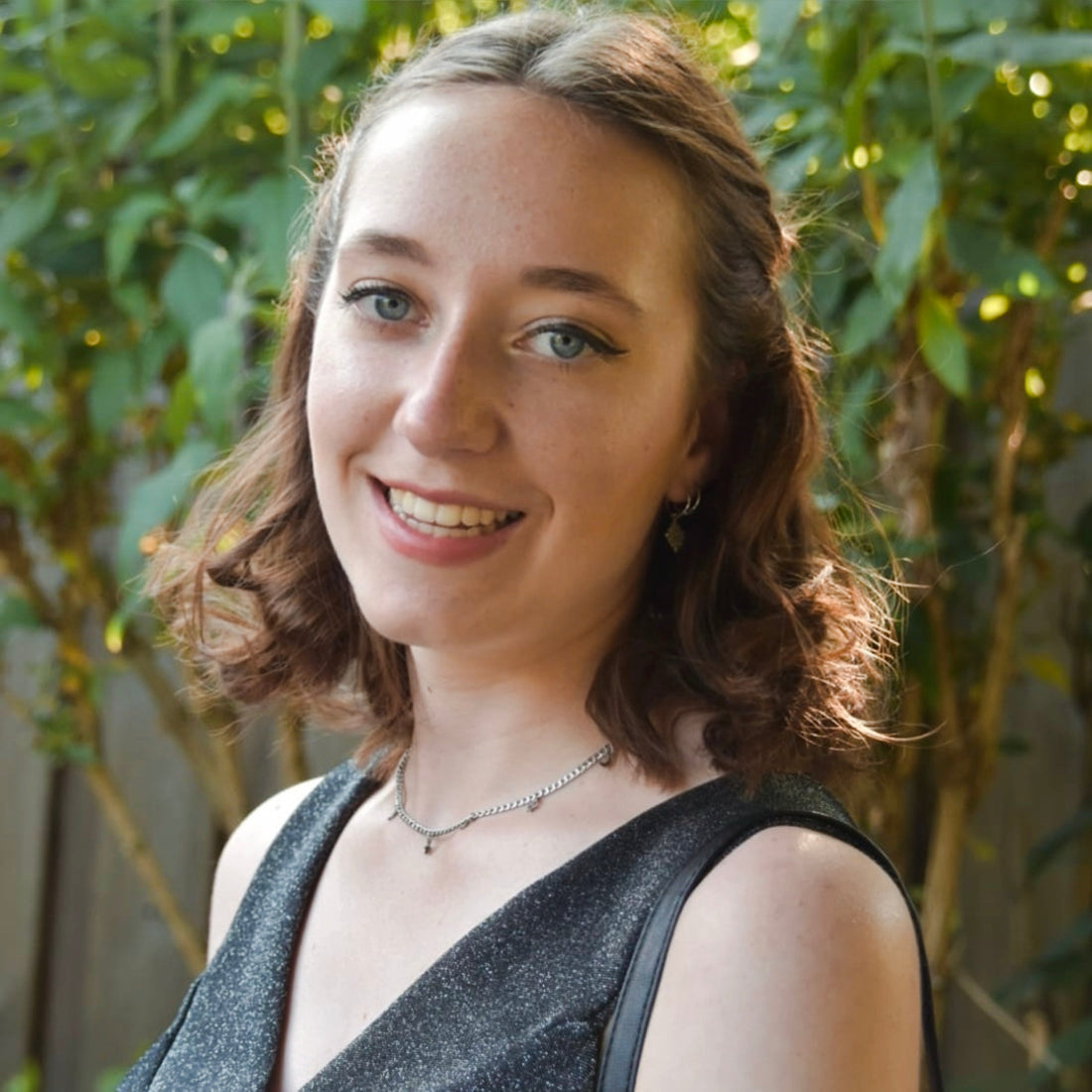
Mirthe's story.
Living with a chronic illness
Can you tell us something about yourself?
(For example your name, age, profession, hobbies)
I'm Mirthe, 19 years old, and I'm studying to become a teaching assistant. In my free time, you can often find me baking delicious treats in the kitchen, working at the campsite, or by the water with my stand-up paddleboard.
What chronic illness do you have and when were you diagnosed?
In October 2024, after a long search, I finally received the diagnoses: endometriosis and adenomyosis. In February 2025, I was also diagnosed with irritable bowel syndrome. I've also suffered from hypermobility since I was 8.
What was the process like leading up to your diagnosis?
The process to my diagnosis took an incredibly long time, seven years to be precise. I got my first period when I was 12. In the years that followed, I experienced a lot of pain around my period. That's why I started taking the pill at 15. After that, the symptoms only got worse.
I went back to the doctor with abdominal pain and was given several (possible) diagnoses: irritable bowel syndrome, lactose intolerance, and, most importantly, I was told I was suffering from stress. The symptoms only worsened.
Until last year, it got so bad that I decided to ask for a referral to a gynecologist. Two ultrasounds were performed, which, according to the gynecologists, revealed nothing. But my gut feeling wasn't right. So I asked for a referral to a specialist gynecologist. He looked at the ultrasounds and immediately told me something wasn't right: I had thickenings in and around my uterus, which turned out to be endometriosis and adenomyosis.
Impact on daily life.
How does your illness affect your daily life?
Due to the significant impact of my medical conditions, it's difficult to continue my education. I can't even attend full weeks of school. Maintaining social contact is also challenging. My fatigue and pain often force me to cancel appointments or prevent me from participating with my peers.
What adjustments did you have to make to your routine?
To make life a little more bearable, I've had to adjust several things in my routine. For example, I only eat fresh food, I try to schedule more rest, and I take everything one day at a time.
How did those around you (family, friends, work) react to your diagnosis?
After my long search for answers to my stomach complaints and fatigue (and later many other complaints), those around me were especially relieved that I finally knew where all the complaints came from.
Physical and mental health
My physical and mental health are much worse than those of my peers. I often get tired quickly after a walk. I also find the mental aspect very challenging. I struggle to accept my condition and the fact that I'm not like my peers. I also find it difficult to cope with the pain and uncertainty.
Which symptoms affect you the most?
The symptoms that have the most impact at the moment are mainly fatigue and abdominal pain.
How do you cope with the mental impact of your illness?
I find the mental impact of my illness perhaps the most difficult: the uncertainty, having to cancel things, and especially the reactions of others.
Now I'm trying more and more to talk to others about my illness so they know what's going on. This makes others more understanding. I also try to stay positive and look at what's still possible.
Do you have any specific aids or treatments that help you?
Over the past few years, I've had several rounds of therapy. I also use pain medication and antidepressants to make things a little easier on myself. On days when I'm in a lot of pain, I use my TENS machine, which can sometimes provide relief.
I also got a medical piercing to relieve my headaches. These headaches were caused by my endometriosis, and miraculously, the piercing finally got rid of them.
Medical care and experiences
What are your experiences with medical care?
In my experience, patients aren't listened to enough. They're quick to say they're suffering from stress or irritable bowel syndrome, without conducting thorough investigation.
Do you have positive or negative experiences with doctors and specialists?
I've had both positive and negative experiences with doctors. I'm very satisfied with my gynecologist specializing in endometriosis. He at least listened and was very helpful after the diagnosis. I can always contact him, and we'll work together to see how we can improve things.
What do you wish doctors understood better about your illness?
I wish doctors would understand the impact this disease has on your daily life, especially the life of a 19-year-old.
What advice or treatments have worked well for you?
The Mirena IUD has at least stopped my periods and stopped me from experiencing constant, extreme abdominal pain. The medical piercing has also helped me a lot. (Note: just because this works for Mirthe doesn't mean it will work for you; it varies greatly from person to person.)
Support and community
Have you found support from peers or online communities?
Since my diagnosis, I've joined several online communities. I've found a lot of support from others in the same situation.
What does support mean to you, and what helps you most?
For me, support mainly means that someone understands what you are going through, and that you can share your story with people who really understand.
Tips and advice
What is your most important tip?
My advice is, above all, don't doubt your gut. For seven years, I had a feeling something wasn't right, and no one believed it. Until I finally got those diagnoses after seven years. So, above all, follow your gut and persevere even if no one believes you.
What advice would you give to someone who has just been diagnosed?
Take it easy and see what works best for you. Do you prefer to let everything sink in, or would you rather have support from others in the same situation? Choose what works best for you!
What advice would you give to healthy people about living with a chronic illness?
Don't judge a book by its cover! Someone with a chronic illness can laugh, party, or just let loose. But remember that's just a snapshot, and that someone with a chronic illness is often not the same as you see them at that moment.
Future and hope
How do you view the future with your illness?
I especially hope that in the future, more attention will be paid to people with endometriosis. And I especially hope that effective treatment will be developed so that this disease becomes much less severe.
Do you have certain goals or dreams that you want to achieve despite your illness?
My biggest dreams are to continue my studies and, later on, take wonderful trips. I don't know if it's possible, but you can always dream!
Love,
Myrthe.