Ilse's story.
Living with a chronic illness.
Can you tell us something about yourself?
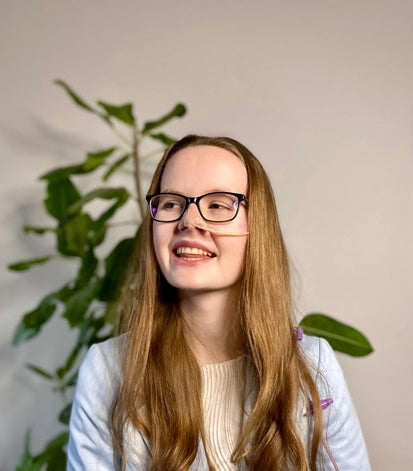
Hi, I'm Ilse Keuning, 19 years old, and I run my own social media company... from bed. Yes, really, from bed. Not because I want to, but because my body leaves me no other choice. Chronic, incurable illnesses have made studying, working, exercising, and everything my peers take for granted no longer possible. But despite that, I refuse to focus solely on the limitations. I find happiness in the little things: burying myself in a good book, getting creative with drawing and diamond painting, building with LEGOs, and enjoying a good movie or TV show. My life is different, but no less valuable.
What chronic illness do you have and when were you diagnosed?
In 2023, I was diagnosed with endometriosis and adenomyosis. At the end of 2024, I was diagnosed with gastroparesis. And in 2025, I was diagnosed with several vascular compression syndromes, including Nutcracker syndrome, May-Thurner syndrome, pelvic congestion syndrome, and MALS, plus seven other compressions. Vascular compression syndromes involve external compression of major blood vessels and organs within the body. The high pressure and blood shortages in some areas and excess blood flow in others lead to severe pain, organ failure, and even life-threatening complications and situations. This has had a significant impact on me.
What was the process like leading up to your diagnosis?
I've struggled with health issues my whole life. The hospital visits began in 2017, and from 2021 onward, the pain became chronic and increasingly unbearable. It was a never-ending search, during which I repeatedly hit brick walls. Finally, I took the plunge and went abroad to get real answers. But even now, finding the right care and treatments remains a struggle. It's a path fraught with uncertainty, but I keep searching.
Impact on daily life
How does your illness affect your daily life?
In every conceivable way. My body forces me to be completely dependent on a feeding tube, a tube, and a pump that are with me 24/7. Being underweight, experiencing extreme pain, and chronic fatigue have left me largely bedridden and wheelchair-bound. I spend my days in bed at home or in the hospital, with endless admissions and appointments. It feels like I'm trapped in a body that repeatedly lets me down. A struggle without a pause button.
What adjustments did you have to make to your routine?
From a life where I competed in high-level sports seven days a week, studied, and thoroughly enjoyed everything I did, to an existence where every day revolves around survival. My chronic illnesses have turned everything upside down. Where I was once completely independent, I now depend on informal care 24/7. Everything has changed. Everything.
How did those around you react to your diagnosis?
My loved ones had known for a long time that I was ill. When the diagnosis finally arrived, it brought a sense of peace. We finally knew what was wrong. But not everyone stayed. Being ill is lonely. People lose interest when you can no longer participate in "normal" life. That hurts. At the same time, I also have so many loving people around me who always help me see what's possible. And I cherish them.
Physical and mental health
Which symptoms affect you the most?
The constant pain drains all my energy and forces me into a mostly lying-down existence. But perhaps the most painful part is the tube feeding. Constantly being attached to tubes. Carrying a pump everywhere. Constantly thinking about what's possible and what's not. My spontaneity has been taken away, but especially my trust in my own body. And that's something that won't easily return.
How do you cope with the mental impact of your illness?
Sometimes it feels like I'm standing still while the world around me keeps going. The dreams I once had seem further away than ever. But giving up? I won't. No matter how hopeless it feels sometimes, there's a fire burning inside me that refuses to go out. I fight. For a future, even if it's different than I'd hoped. And in the meantime, I'm learning to find happiness in the little things: a warm hug, a ray of sunshine on my face, a sweet message. Little glimmers of light in the darkness.
Do you have any specific aids or treatments that help you?
My tube feeding is literally my lifeline. My wheelchair also gives me back a bit of freedom. Medication helps make the symptoms a little more bearable, but real treatment? I'm still fighting for that. Even now, we're seeking medical help abroad because the Netherlands doesn't offer enough options.
Medical care and experiences
Do you have positive or negative experiences with doctors and specialists?
Too many doctors didn't believe me. I was sent from pillar to post, told, "Probably an eating disorder..." As if I was the cause of my pain and misery. Wasn't I crying out for help? I felt so powerless. It had a huge impact on my mental health. Fortunately, I've now found doctors who do listen, who fight alongside me. And that makes all the difference.
What do you wish doctors understood better about your illness?
That five minutes of their time can change my whole life. That a negative test doesn't mean I'm healthy. That sometimes they just have to admit they don't know either. Egos aside, truly listening—that's what patients like me with rare diseases so desperately need.
What advice or treatments have worked well for you?
The best advice I can give? Listen to your body. It needs rest, no matter how frustrating that is. Until I find a treatment that works, that's all I can do.
Support and community
Have you found support from peers or online communities?
Absolutely. On my social media, I share openly and honestly about living with a chronic illness. Because of this, I've met so many wonderful people, both fellow sufferers and others who support me. That connection means the world to me. It helps me feel like I'm not alone.
What does support mean to you?
A small gesture can mean so much. A card, a message, a hug. These are the actions that show me I'm not alone. And my dear mom and sister truly help me through the hardest days.
Tips and advice
What advice would you give to someone who has just been diagnosed?
Be kind to yourself. Feel what you need to feel. You don't always have to be strong. And know that, despite how hard it feels now, there will still be beautiful moments. Bright spots in the darkest times.
What advice would you like to give to healthy people?
Don't take anything for granted. Your average day is someone else's biggest dream. So live. Not tomorrow, not ever. Now.
Future and hope
How do you view the future?
Sometimes the future feels scary, because I know I need help to even look forward to it. But as long as I'm alive, I'll fight. For a future, in whatever way I can. And in the meantime, I'll savor the beautiful moments that are there.
Do you have dreams that you want to realize despite your illness?
I want to share my story. To help others. To give a voice to those who suffer in silence, who feel as misunderstood as I often have. And above all? I hope one day I can do more than just survive. To truly live again. That's what I'm going to fight for!
Love,
Ilse
2 comments
Lieve Ilse,
Na het lezen van je verhaal viel ik helemaal stil, zo mooi geschreven, zo puur, maar ook heftig en wat binnen komt. Ik bewonder jouw vechtlust en positiviteit, ondanks dat je het zo vreselijk moeilijk hebt. Dat is ook niet vanzelfsprekend, maar je doet het wel. Het is niet alleen zwaar voor jou, maar ook voor je mama en zusje, mijn respect daarvoor. Wat ik vooral ook zie is een hoop liefde tussen jullie , erg mooi om te zien. Ik ben er niet fysiek bij, maar volg jullie wel en denk aan je.
Van mij een dikke knuffel x
❤️