Hester's story.
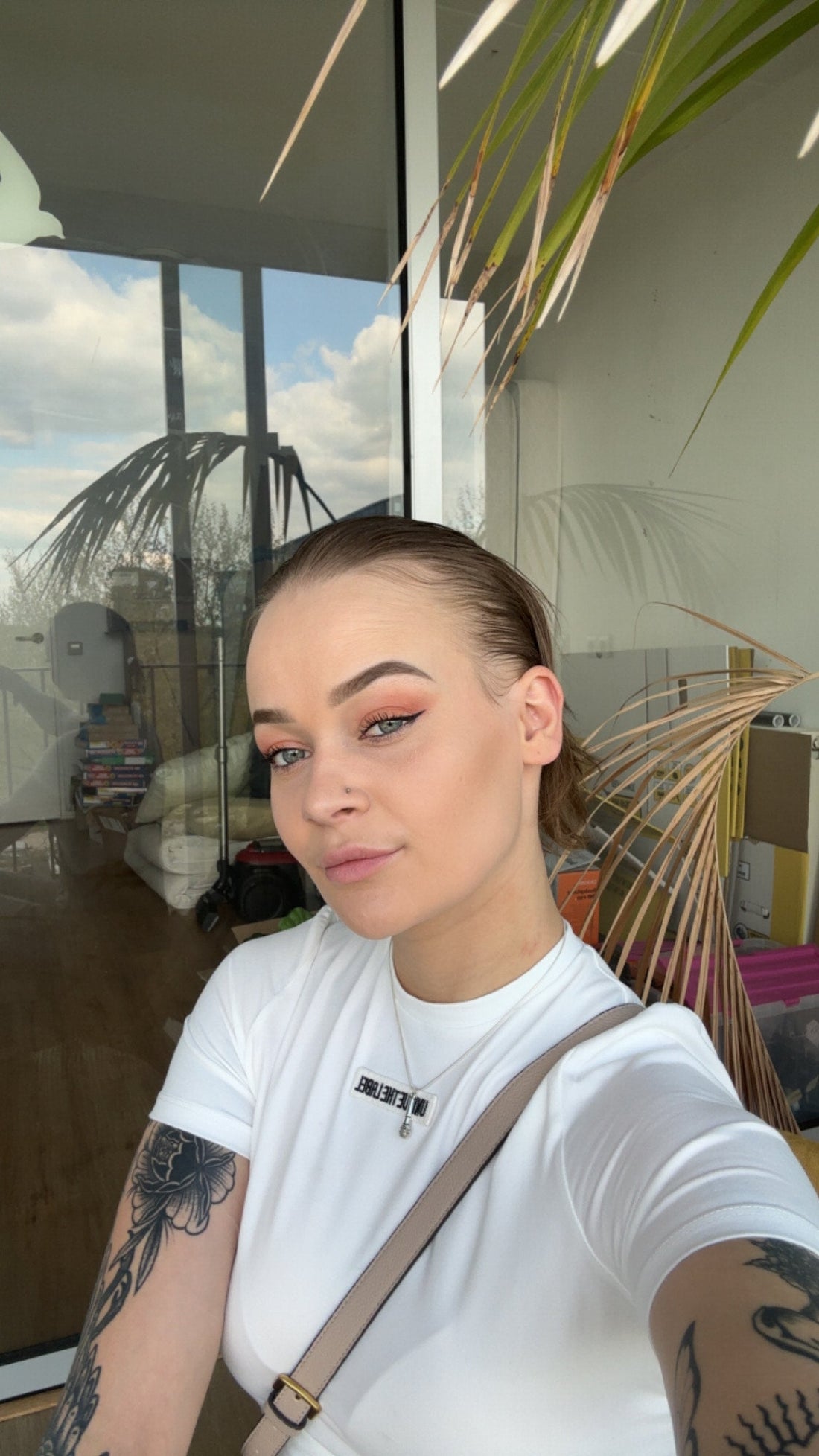
Living with a chronic illness
General information.
Can you tell us something about yourself?
(For example your name, age, profession, hobbies)
Hi! My name is Hester Zwerver. I'm 24 years old and I'm in the military. As a hobby, I enjoy meeting up with friends and I regularly go on vacation with my boyfriend.
What chronic illness do you have and when were you diagnosed?
I have PCOS, endometriosis, and adenomyosis. I also have alopecia areata universalis, but my hair is growing back nicely now!
I was diagnosed with PCOS and endometriosis in 2022. I was diagnosed with adenomyosis in 2025.
What was the process like leading up to your diagnosis?
The diagnosis of PCOS and endometriosis happened very quickly. My boyfriend and I were trying to conceive, but it wasn't working. I also experienced excruciating pain after stopping the pill. They then performed an internal ultrasound, which confirmed I had PCOS. But that didn't explain the pain. I was quickly scheduled for laparoscopy in September 2022, where they discovered I had endometriosis. They removed it in three places: near my bladder, behind my uterus, and at the front of my uterus. Afterward, I was sent home with this news without any care and immediately started fertility treatment. Knowing what I know now, I find that truly scandalous.
After two and a half years of OI and IUI treatments and two failed implantations, I couldn't cope mentally anymore, and we stopped. After a while, my symptoms worsened, and I asked the hospital if they could perform a laparoscopy to determine if it was caused by the endometriosis. They deemed this too early, and without further examination, they sent me home—not even an MRI. I sensed something was wrong and requested a second opinion at another hospital. They performed an internal ultrasound and immediately detected adenomyosis (June 2025). I was stunned. How could they see this within a second, while the other hospital refused to help me? I was immediately scheduled for an MRI. It showed that the adenomyosis was stable, but that the endometriosis had returned: at the front and back of my uterus and in my bowel. Because of this, I need surgery to have a section of bowel removed. They will only determine the exact extent of the damage during the surgery.
I'll soon have an appointment with a fertility specialist specializing in endometriosis and adenomyosis. We'll discuss how much time I have left to get pregnant and how soon the surgery should take place. I'm still traumatized by the fertility treatment, so I'm not ready for IVF yet. I don't know if I'll be mentally ready in time, or if it'll already be too late. That's frustrating, because if the first hospital had been more thorough, we could have skipped those two and a half years of OI and IUI and started IVF right away.
In retrospect, this could have been discovered much earlier. When I was 15, I ended up in the emergency room with severe pain. They thought it was appendicitis, but that turned out not to be the case. Eventually, I was told that menstrual pain was "part of the experience." After that, I was put on birth control pills to suppress the pain.
Impact on daily life
After my first surgery, my life improved significantly. I didn't have to call in sick to work once in the first year. Before that, it was quite different: screaming on the cold bathroom floor because I was sweating profusely, soaking wet clothes, vomiting from the pain, unable to walk. Sometimes it was so bad that I told my boyfriend I couldn't go on. I honestly felt like I was dying. That might sound exaggerated, but in those moments, it was true. I ended up in the emergency room several times, but they couldn't do anything. "Just take another diclofenac," they said.
Now the pain is present almost every day, but bearable. There are still days when it's unbearable and all I can do is lie on the couch. But I'm just happy to be able to do things a healthy person does again.
How does your illness affect your daily life?
It's a very up-and-down experience. Right now, I'm feeling the biggest mental impact. I just found out that a section of my bowel needs to be removed because the endometriosis has started to infiltrate it. That's causing tension and uncertainty. The pain is manageable with painkillers, but I don't know what the future holds or how my adenomyosis will develop. I'll probably have to have my uterus removed at some point. That creates a lot of uncertainty. You have to make choices: how much fertile time do I have left? Do I want another fertility treatment? Can I handle IVF? And can I handle this pain if I ever have a child? That's taking a toll mentally.
What adjustments did you have to make to your routine?
I have to accept that I can't always fully participate with my colleagues. The military can be quite physically demanding. I'm not a wimp and always give 100%, but sometimes it just doesn't work out. Still, I don't want to say I'm upset. I'm afraid people won't understand, especially in a man's world. Maybe that's just my own thought, but it's there.
Besides, I sometimes have to cancel plans with friends. After days of intense pain or fatigue, I just don't want to do anything.
How did those around you react to your diagnosis?
So sweet! Of course, they had to look it up first to find out exactly what it was. People will never fully understand what I'm feeling, but I feel a lot of support. My boyfriend is truly my rock: he helps me with everything and is always there for me. My colleagues and manager are also understanding. For example, my major once sent me home when I received bad news about our desire to have children and even arranged for my boyfriend (also in the military) to go home too. That was a great support for us.
Physical and mental health
Which symptoms affect you the most?
Right now, I'm struggling more with the mental consequences than the pain. The fertility treatment left me with trauma, and the news about the adenomyosis is hitting me hard. Physically, it's also harder now because the endometriosis is in my bowel. I have to see a pelvic floor physiotherapist and a sexologist. I find that difficult because it's so personal, but it's necessary. The physical trauma reactions. They affect my intimacy and how I experience examinations at the gynecologist. I also have fatigue, abdominal pain, and back pain. Sometimes I have to put things aside because of it.
How do you deal with the mental impact?
Overall, it's good. I see myself as a strong woman who wants to stay positive. Of course, that's not always easy. Sometimes everything just sucks. (Can I say that? Haha.) I talk to professionals, and that helps. I'm proud of how my boyfriend and I handle everything despite the setbacks.
Do you have any aids or treatments that help?
On bad days, I take between 200 and 300 mg of diclofenac. That helps. I'm also starting pelvic floor physiotherapy in September because my muscles are constantly tense due to the discomfort in my abdomen. I also talk to a sexologist and talk to my boyfriend a lot. His patience is priceless.
Medical care and experiences
Do you have positive or negative experiences with doctors and specialists?
In Heerenveen, I received poor care. At 15, the pain was dismissed as "menstruation." During my laparoscopy, they removed endometriosis and immediately sent me on a fertility treatment plan, with no aftercare. After two years of complaints, they refused to do anything because it was "too soon" after the surgery. Fortunately, in Leeuwarden, they took me seriously right away and detected adenomyosis on the ultrasound. Now a plan is being developed, which gives me peace of mind.
What would you like doctors to understand better?
That so much pain during menstruation isn't normal. If you regularly end up in the emergency room because of the pain, there's definitely something wrong. Women are often not taken seriously when they have abdominal pain, but this isn't pretentious.
What advice or treatments have worked for you?
I can't really say anything about that yet. I'm only just starting a treatment plan.
Support and community
Have you found support from peers or online communities?
My boyfriend is my biggest support. I also have a friend who had her uterus removed due to adenomyosis, and talking to her helps immensely. Devney's Facebook group (Endometriosis & Adenomyosis) also provides a lot of support and recognition.
What does support mean to you, and what helps most?
That my pain is acknowledged. I don't expect people to do everything for me, but just to understand that sometimes I have an off day. Being honest helps me the most.
Tips and advice
What advice would you give to someone who has just been diagnosed?
Keep pushing doctors. You have the right to tests. Trust your body: you can sense when something's wrong. Give yourself some rest and don't be too hard on yourself. Get well-informed about the next steps. Don't just let them send you away. I was left to fend for myself, and now I have to have a section of my intestine removed. That could perhaps have been prevented.
What would you like to share with healthy people?
Read up on the situation, try to empathize, and be kind. Not every illness is visible. Sometimes a simple gesture, like meeting someone at their home instead of going out, can be incredibly helpful.
Future and hope
How do you view the future with your illness?
I'm really nervous. I know I'll have more surgeries and the pain will get worse. The day will come when I have to have my uterus removed. When? I have no idea. I'm trying to enjoy the days that are going well, and right now there are still many. We'll see. That's all I can do. I'm debating whether to do IVF or just leave it alone. My greatest hope is a happy life with my partner.
Do you have certain goals or dreams that you want to achieve despite your illness?
My dream fluctuates between having a baby and emigrating to the sun. And one of those two will definitely happen.
Love,
Hester
1 comment
Een mooi en duidelijk verhaal over hoe het is om niet begrepen te worden als vrouw die lichamelijke klachten heeft met enorme pijnen die in eerste instantie niet serieus worden genomen door dokters en artsen .