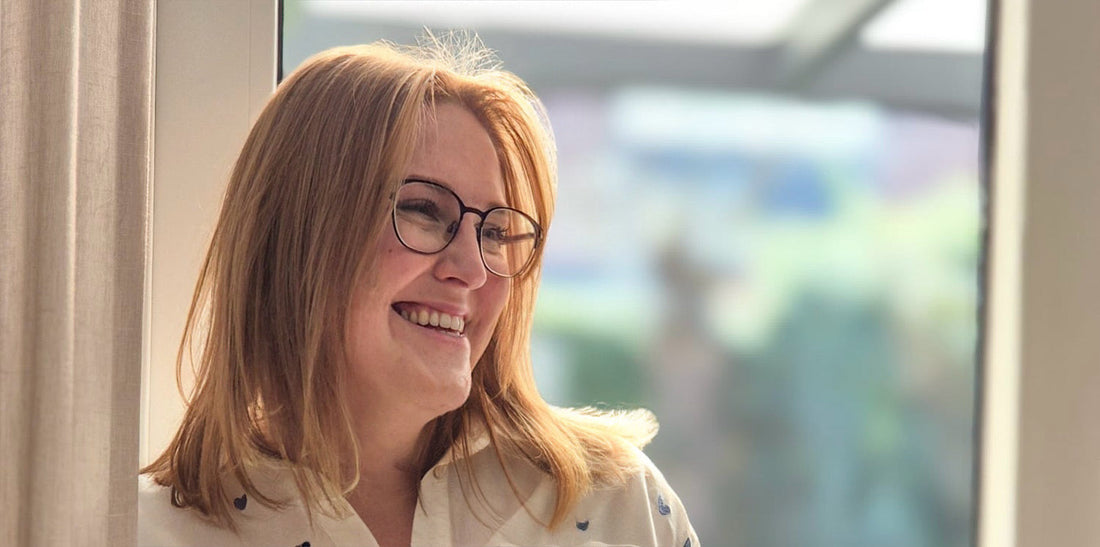
The story of Esther.
Living with a Chronic Illness
General information
Can you tell us something about yourself? (For example, your name, age, profession, hobbies)I'm Esther, 32 years old, and I live in South Limburg with my husband. In my free time, I enjoy walking, swimming, exploring new places, hanging out with friends, and working on our interior. What chronic illness do you have and when were you diagnosed?Endometriosis had been suspected for years. During an ectopic pregnancy in 2023, they discovered I also had adenomyosis; the pregnancy was located in an adenomyosis site. In early 2025, I had a laparoscopy, which was the only official diagnosis of endometriosis that was made. How was the process leading up to your diagnosis? (For example, quick, long, frustrating, or involved visiting many doctors.)All in all, it took quite a while before I got the diagnosis. From the age of 14, I'd already had more painful periods than I'd seen with friends and classmates. I'd been to the GP, the GP, and the ER multiple times with extreme pain, but I was always told "it's part of it" or "it's all in your head." It's a real shame, especially now that I've only just discovered that all my nieces and grandnieces also have endometriosis or adenomyosis. I suspect my grandmother and her sisters also had it.Impact on daily life
How does your illness affect your daily life?Now, after the laparoscopy, I notice it bothers me much less. But by the end, I was in constant pain. I was finding it increasingly difficult to walk far or do things around the house. I also had to cancel on friends, work from home, or call in sick more often because of the pain. What adjustments did you have to make to your routine?Energy management is a key part of my life. It allows me to continue doing everything (as much as possible). I also pay close attention to my diet to prevent unnecessary flare-ups or inflammatory reactions. How did those around you (family, friends, work) react to your diagnosis?Overall, I really have nothing to complain about. I'm lucky to have a wonderful, supportive partner, dear friends, and a great employer who takes me seriously and supports me. Although it's still painful sometimes that people don't fully understand that now that the endometriosis has been surgically removed, I still have pain due to the adenomyosis. So, energy management remains necessary. Also, not everyone understands that there's nothing that can be done about the adenomyosis as long as we want to have children, and the impact of a hysterectomy. I've heard the comment "then just have your uterus removed" a few times. This is something I really don't accept.Physical and mental health
Which symptoms affect you the most?Before the laparoscopy, pain and my energy levels were the most defining factors in my life. I experienced (almost) daily abdominal pain, back pain, groin pain, radiating pain to my buttock and leg, pain during toilet visits, difficulty emptying my bladder, which also led to several pyelonephritis episodes, ovulation pain, chronic ferritin deficiency due to heavier periods and inflammatory reactions, and, in addition to the ectopic pregnancy, I had repeated miscarriages. Although the laparoscopy was only recently completed at the time of writing, I now only experience abdominal pain just before and during my period due to the adenomyosis. The low energy level is also less of an issue, but it's still there. How do you cope with the mental impact of your illness?I find that the more openly I talk about it, the more understanding I can get. Talking about it openly also helps me cope.I also had ACT therapy in the past for something else. I find that it also helps me put things into perspective, cope with these illnesses, and continue to enjoy life and emphasize that. Do you have any aids or treatments that help you? (e.g. medication, therapy, aids)Painkillers, hot water bottles, pelvic floor physiotherapy, osteopathy, and (although I hate to say this because I don't want to downplay anything) yoga and breathing exercises also help me take the edge off. Of course, none of this is a miracle cure. They are, however, helpful tools that support me.Medical care and experiences
Do you have positive or negative experiences with doctors and specialists?Even though those doctors couldn't do anything about it due to their limited knowledge, I still find it painful that I was dismissed in the past, saying I was too young, shouldn't make a fuss, pain is part of life, etc. Hearing stories from other people in the same situation about how doctors treat them also breaks my heart. This demonstrates the urgent need for more knowledge. Fortunately, I now see a specialist in Maastricht and one in Amsterdam whom I can trust.
Of course, it also depends on which "person" you encounter. I've filed complaints against experienced doctors because of the way they treated me, but I've also encountered younger doctors who listened to me, explored the potential impact of the endometriosis, and also looked beyond the patient. If I didn't feel comfortable with a doctor, I'd ask for someone else. So, in addition to two good gynecologists, I also have a good urologist for my bladder problems and an internist for my ferritin deficiency. What do you wish doctors understood better about your illness?Sometimes, I think doctors should look beyond the obvious and consider the underlying connections. Endometriosis or adenomyosis isn't just a disease of the female reproductive organs. For example, at my GP's insistence, I was referred to an internist. When he saw both endometriosis and adenomyosis, he immediately checked my ferritin, in addition to my blood sugar. It turned out to be much too low. He'd seen this connection occur frequently in his practice, so he went with his gut feeling. What advice or treatments have worked well for you?Pelvic floor physiotherapy and osteopathy have been very helpful to me. In the past, I also benefited greatly from hormones; I lived virtually pain-free. However, it wasn't until I stopped taking hormones that it turned out that many mental health issues were related to them. So, I don't know if I'll ever take hormones again in the future. The laparoscopy has also significantly reduced my symptoms. The endometriosis diet is also helping me a lot, but in the future, I'll be seeing a dietitian to address the issues more specifically using the low-fodmap diet.Support and community
Have you found support from peers or online communities?I'm part of a support group online. Besides the online contact, I've also become friends with several others who are in the same situation. It's nice to be able to talk about it with someone who recognizes it without having to go through a long explanation. I can discuss the situation more easily with them than with friends who don't have these illnesses. I can share my frustrations with them, or, let's be honest, just poke fun at the situation and laugh about it to make it a bit more lighthearted and bearable. What does support mean to you, and what helps you most?Talking helps me the most, personally. But it's also nice when I can just sit with friends in my sweatpants with a hot water bottle. Or just vent. They don't always have to understand; just listening goes a long way. I think the best advice if you have a chronic illness yourself is to indicate how you want to receive support. Conversely, if you know someone with a chronic illness, ask them how you can best support them. Don't avoid the conversation, but rather engage them.Tips and advice
What advice would you give to someone who has just been diagnosed?Stand up for yourself and educate yourself as thoroughly as possible about your diagnosis. Unfortunately, not every doctor will know what your illness entails, or they may rely on incorrect information. Also, keep track of everything and, if necessary, seek help from a psychologist if you would like. Unfortunately, your perseverance and resilience will sometimes be severely tested. What advice would you give to healthy people about living with a chronic illness?Please believe what anyone tells you. Someone with a chronic illness doesn't want to act out and would much rather be healthy. Don't tell them stories like, "about the aunt's neighbor's sister's niece," "I sometimes feel pain too," or "try eating healthier." If all that helped, there wouldn't be so many sick people. A chronic illness isn't always visible; in that respect, a broken leg is easier for the rest of your life.Future and hope
- How do you view the future with your illness? (I'll combine this question with the next one.)
Do you have certain goals or dreams that you want to achieve despite your illness?I hope my husband and I will be blessed to experience a happy, healthy, full-term pregnancy at the right time, and to welcome a healthy, living child into our family. The road to that goal may be a bit more difficult due to the risks I face with endometriosis and adenomyosis, but I remain confident that things will work out one day and we will be able to hold a healthy, living child of our own in our arms.
I find it hard to say what the future will bring. Perhaps I'll be one of the lucky ones whose symptoms will subside after pregnancy. Perhaps I'll be unlucky and experience worsening symptoms, and I'll end up taking hormones again. I'd rather just let things happen instead of worrying about it now.
Love,
Esther