The story of Dionisia.
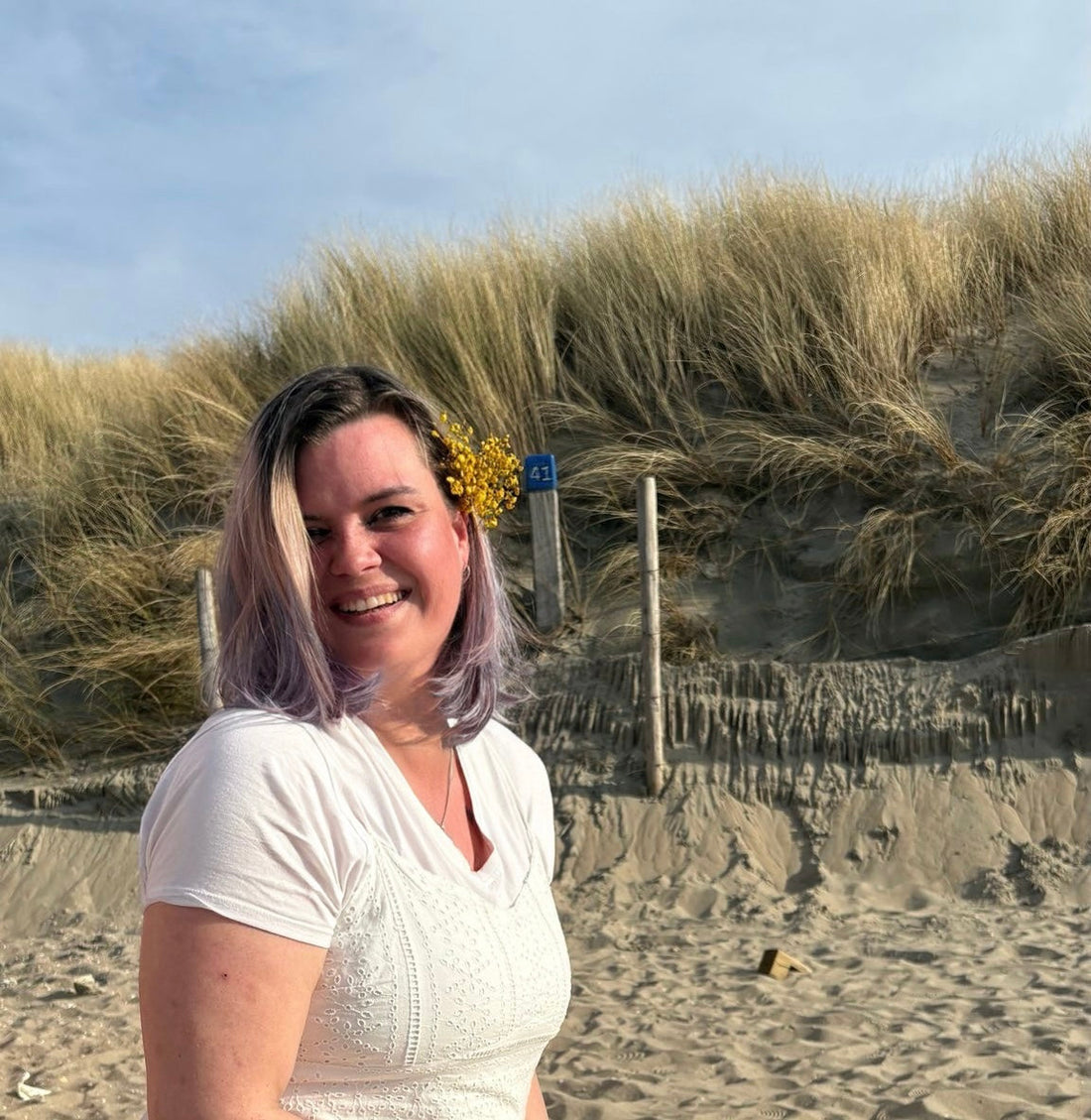
Living with a Chronic Illness
General information.
Can you tell us something about yourself?
Hi, my name is Dionisia and I'm 38 years old. Unfortunately, I'm no longer working, and my hobbies are mainly working with animals. I also enjoy being a support system for our members in the Facebook group, where we currently have over 2,000 members and are still growing.
What chronic illness do you have and when were you diagnosed?
In 2018, I was diagnosed with celiac disease and lactose intolerance, in 2020 with grade 4 endometriosis and adenomyosis, and in 2024 with partial gastric paralysis and POTS (Postural Orthostatic Tachycardia Syndrome).
What was the process like leading up to your diagnosis?
The process was truly dramatic! It took 22 years to get a diagnosis. I was a hypochondriac; it was part of being a woman… I had a low pain threshold… I was overreacting because there was nothing wrong with me… the list is incredibly long.
Before I found the right doctor, I must have seen between 20 and 30 doctors (no exaggeration).
Impact on daily life
How does your illness affect your daily life?
Actually, quite a lot. I have to assess absolutely everything: whether it's feasible, whether there aren't too many appointments in one day, how many spoons I'll have when I wake up. It affects every detail. Sometimes it takes more energy to organize and plan everything for a day to be able to handle it than to actually do it.
What adjustments did you have to make to your routine?
Taking a lot more rest, learning new boundaries that I still sometimes cross, but also being clear with those around me, whether they like it or not. But if something costs me more than it brings in, I don't do it anymore.
How did those around you (family, friends, work) react to your diagnosis?
Because it took me 22 years to get answers about why I was always sick and in so much pain, everyone was actually just happy for me, and there was suddenly much more understanding. Sometimes it felt like you were secretly never believed, but now that there was a clear answer, it was suddenly: oh, so you really do have something.
Work, on the other hand, was understanding until they realized that this wasn't something that would go away and I wouldn't be returning to the work floor right away, then they started being very nasty.
Physical and mental health
Which symptoms affect you the most?
The main symptoms I experience are fatigue, which is one of the most important things. But even as soon as I wake up, the pain is there. Some days the pain is perfectly manageable, and other days I lie on the couch or in bed all day; it comes in waves.
But also joint pain every day, especially in the back and pelvis, and that makes getting through the day quite difficult sometimes.
How do you cope with the mental impact of your illness?
Better now than at the beginning. When I first got the diagnosis and the confirmation after years that I wasn't crazy and that something was indeed wrong with my body, it was a huge blow! And then all the emotions from all the years of being ignored and disbelieved came flooding back. This also led to me suffering from medical burnout.
I've been in therapy for quite some time now, both with a regular psychologist and a medical psychologist, to process the medical traumatic experiences. This is also a long-term endeavor that I fully support.
Do you have any specific aids or treatments that help you?
I have enough different medications to make everything bearable, even though they don't always work. I also have a TENS machine, several hot water bottles, and an electric blanket. I also have physical therapy, and I have household help because I can no longer manage everything myself.
I also get a lot of help from my parents.
Medical care and experiences
Do you have positive or negative experiences with doctors and specialists?
Mostly negative, even with a gynecologist specializing in endometriosis. Until I found a better endometriosis gynecologist, and all the alarm bells went off, and I underwent emergency surgery. Unfortunately, this doctor's knowledge and experience weren't what I needed, so I switched to a different specialist, which was a real relief. Suddenly, so much more was possible, and perhaps my wish could even come true.
Changing doctors can sometimes make a huge difference; do your own research into a doctor's knowledge.
What do you wish doctors understood better about your illness?
Hormones don't solve anything, and stop pushing them on women. They can (and I emphasize "can") alleviate symptoms.
And doctors should develop their knowledge on this topic much further. Too much is still unknown about endometriosis, its effects, and the symptoms it can cause or the effects it can have on the body.
Therefore, listen more to patients, who know what they feel and what is happening to their bodies.
What advice or treatments have worked well for you?
Nothing, really! I can't tolerate hormones; they make my symptoms much worse and at the same time, I get sicker.
Diet can help to some extent, but yoga or acupuncture, pelvic floor physiotherapy, those kinds of things have never had any effect.
Support and community
Have you found support from peers or online communities?
Absolutely! Both, actually. And I've even made friends through it. The great thing is that there's an immediate connection, because with someone in the same situation, you don't have to explain yourself or defend yourself.
Especially in our group “Endometriosis & Adenomyosis group” on Facebook.
What does support mean to you, and what helps you most?
Sometimes just having someone to complain to about how awful things are, without judgment or naive remarks. We all need that, and it often brings relief.
Tips and advice
What advice would you give to someone who has just been diagnosed?
Know that the hardest battle is only just beginning. Because now you suddenly know you have something that won't go away and everything will change, and these feelings are okay.
Don't be ashamed of needing help, even if you've always been able to do everything yourself. But now is also the time to truly stand up for yourself and advocate for yourself, whether you need help from your friends and family, doctors, or organizations.
Find support groups and read up on what this condition is, as even doctors give misinformation.
But the most important thing is that you are really not alone.
What advice would you give to healthy people about living with a chronic illness?
Don't judge someone by what you see and think before you speak.
Just because someone doesn't look sick doesn't mean they're not feeling bad.
And ask someone who is chronically ill if there is anything you can do to help them, or do it on your own, but don't judge.
Future and hope
How do you view the future with your illness?
Sometimes I worry about what the future will bring: how many more organs will I lose to this disease?
But I try not to look too far ahead, that just gives me stress personally.
Do you have certain goals or dreams that you want to achieve despite your illness?
Absolute!
The main goal for now is to make my wish come true, but also to do more to raise awareness about the poor care for women and about the care and treatments for endometriosis, as well as giving lectures or presentations.
Love,
Dionisia